

Letter to Myself
Dear Loopels Community,
There are some conversations I choose for Loopels because I am curious.
And there are others I choose because, somewhere deep down, I know I need to have them.
This was one of those.
Six years ago, breast cancer entered my life and divided it very clearly into a beforeand an after.
There was the treatment, of course.
The appointments.
The scans.
The physical toll.
But when I look back now, some of what I remember most vividly happened in the spacesbetween those things.
The waiting.
The uncertainty.
The fear of what somebody might say next.
The strange experience of sitting in a room while people discussed statistics, treatmentplans and probabilities, all while you were trying to comprehend that they weretalking about your life.
Cancer makes you understand very quickly how vulnerable a human being can become.
You hand over your body.
Your trust.
Your future.
And for a period of time, you depend upon people you may only have just met to help youfind your way through.
That experience changed me.
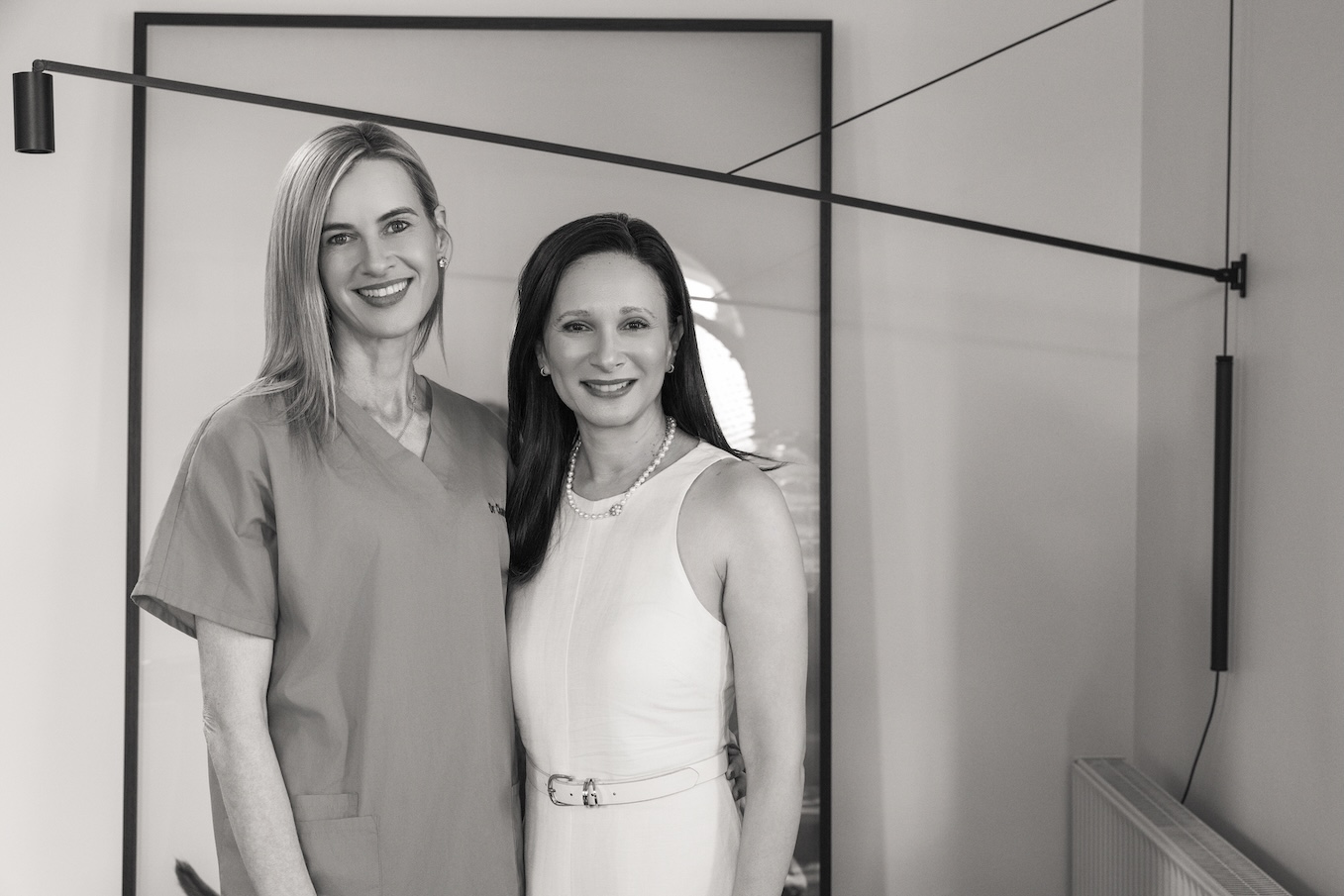
It is also one of the reasons I wanted Cleola Anderiesz and Dr Chantal Thornton to sit across from me for this conversation.
Because they represent two parts of a world I came to understand in a very personal way.
Cleola has spent more than two decades advancing breast cancer research and now leads theNational Breast Cancer Foundation helping drive the work that will change what a breast cancer diagnosis means for generations of women we may never meet.
Chantal sits at the other end of that journey.
She is therein the room.
Across the desk.
Beside the patient.
Having the conversations no woman ever imagines she will need to have.
Her work requires extraordinary clinical skill, but what struck me is that it asks for something else as well.
Humanity.
The ability to tell someone the truth without taking away their ability to believe intomorrow.
And the willingness to remain present when another human being is frightened.
That matters enormously.
Because when you have been the patient, you understand that sometimes you may forget the terminology.
You may forget the exact percentages.
But you rarely forget how somebody made you feel when your world suddenly becameuncertain.
I wanted this conversation to go beyond breast cancer.
I wanted to understand the women who choose to spend their lives inside it.
What draws someone towards work that carries so much responsibility?
How do you continually walk into other people's fear without allowing it to overwhelm yourown life?
How do you hold the stories of thousands of women and still remain open enough to hear the next one?
And who are you when you leave the laboratory, the boardroom or the operating theatre?
Because Cleola and Chantal are not simply impressive because of their titles.
They are impressive because of the way they have chosen to use their lives.
There is something extraordinary about people who make the wellbeing of strangers part of their daily purpose.
People who spend years working towards outcomes they may never personally witness.
People who willingly enter some of life's most difficult moments and say, in one way or another:
I am here. We will work through this.
My own cancer journey taught me that medicine is never only medicine.
It is science, yes.
But it is also communication.
Trust.
Empathy.
Judgement.
Patience.
And sometimes, simply the presence of another person who knows what to do when youdon't.
Perhaps that is why this conversation meant so much to me.
I was not interviewing two women from the outside looking in.
Part of me was still the woman sitting in that waiting room.
Still remembering what it felt like not to know.
Still deeply grateful for every person whose years of research, training, knowledge and care allowed me to eventually walk out the other side.
And six years later, I had the privilege of sitting opposite two women who have devoted their careers to helping others do the same.
Cleola and Chantal reminded me that behind every advancement, every treatment and every statistic are individuals.
People who care enough to keep searching.
People strong enough to have difficult conversations.
People willing to dedicate a significant part of their lives to changing the course of somebody else's.
That is why I wanted them on Loopels.
Not simply to talk about breast cancer.
But to introduce you to the women behind the work.
To understand what drives them.
What the work has taught them about life.
And perhaps to remind anyone currently standing where I once stood that while a diagnosis can feel profoundly isolating, there are extraordinary people who have built their lives around making that journey better.
I know now just how much that matters.
With quiet strength,
Helen
Loopels
Letter to Myself
Dear Loopels Community,
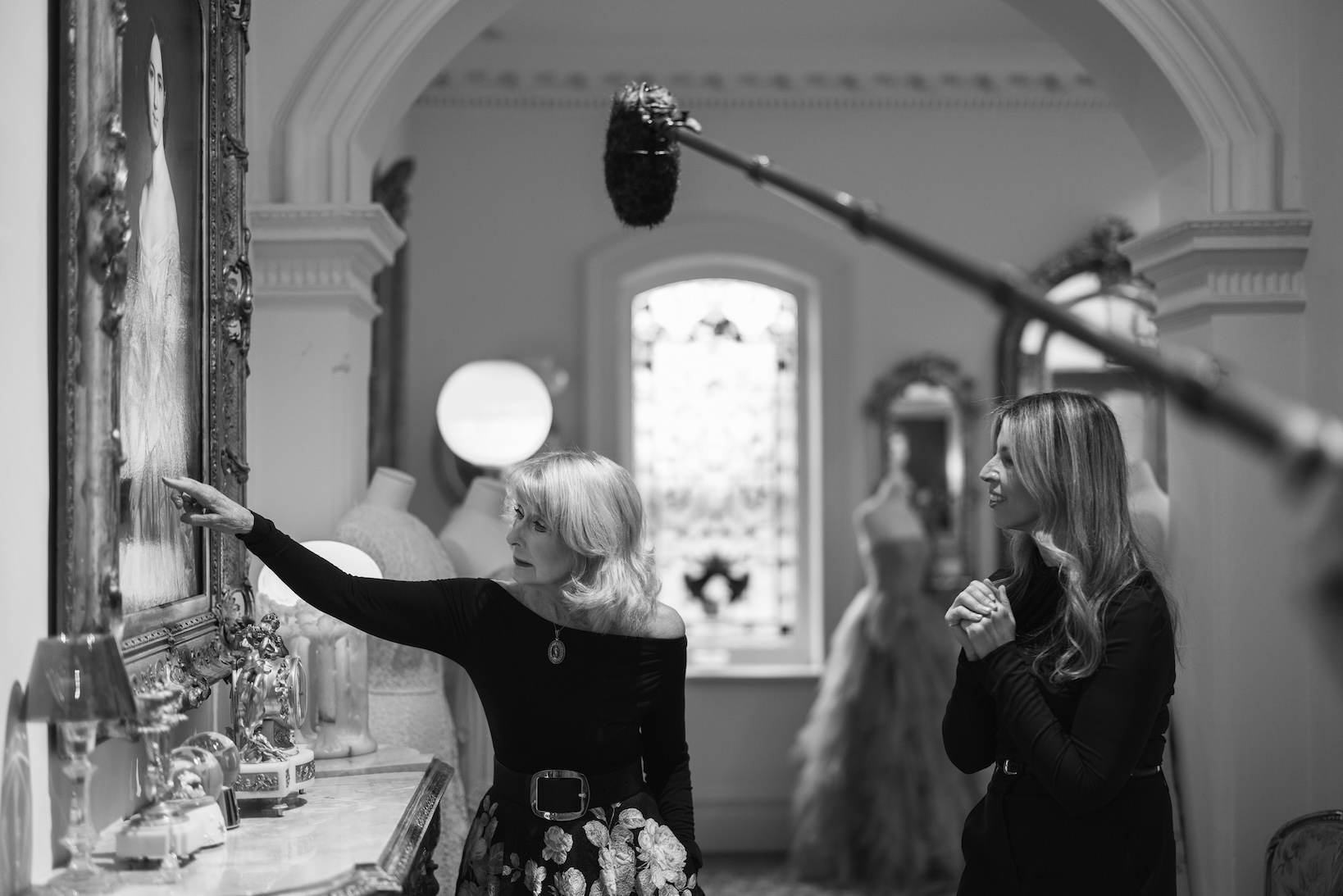
Some conversations stay with you long after the microphones are switched off.
My time with Krystyna Campbell-Pretty AM was one of those conversations. It left me reflecting on what it truly means to live a rich and purposeful life, and I found myself wanting to share some thoughts.
I hope, as the years pass, you never confuse being seen with being fulfilled.
I hope you discover that a beautiful life isn't measured by likes, followers or the opinions of people who barely know you. It's measured by the people you love, the lives you touch, the courage to begin again, and the quiet satisfaction of knowing you lived according to your values.
There will be moments of extraordinary joy, and there will be moments of loss that change you forever. Don't fear either. They will both shape you into someone wiser, softer and stronger than you could ever imagine.
As you grow older, spend less time trying to become who the world expects you to be, and more time uncovering who you already are. That is where purpose lives.
One of the greatest privileges of my life has been meeting women who embody this truth. Women who have discovered that influence isn't something you accumulate, it's something you leave behind through generosity, integrity and service.
Krystyna Campbell-Pretty AM is one of those women.
Her elegance is unmistakable, but it is her character that leaves the deepest impression. Her humility, independence, extraordinary work ethic and unwavering commitment to philanthropy remind us that the richest lives are built not on what we possess, but on what we contribute.
Our conversation is about so much more than success. It's about living fully. Finding purpose after life's pivots. Choosing contribution over comparison. And understanding that the most compelling women are rarely the loudest, they are the ones quietly making the world better because they were here.
I left this conversation reminded that the second half of life can be the most meaningful of all.
I hope, when you listen, you feel the same.
With quiet strength
Helen
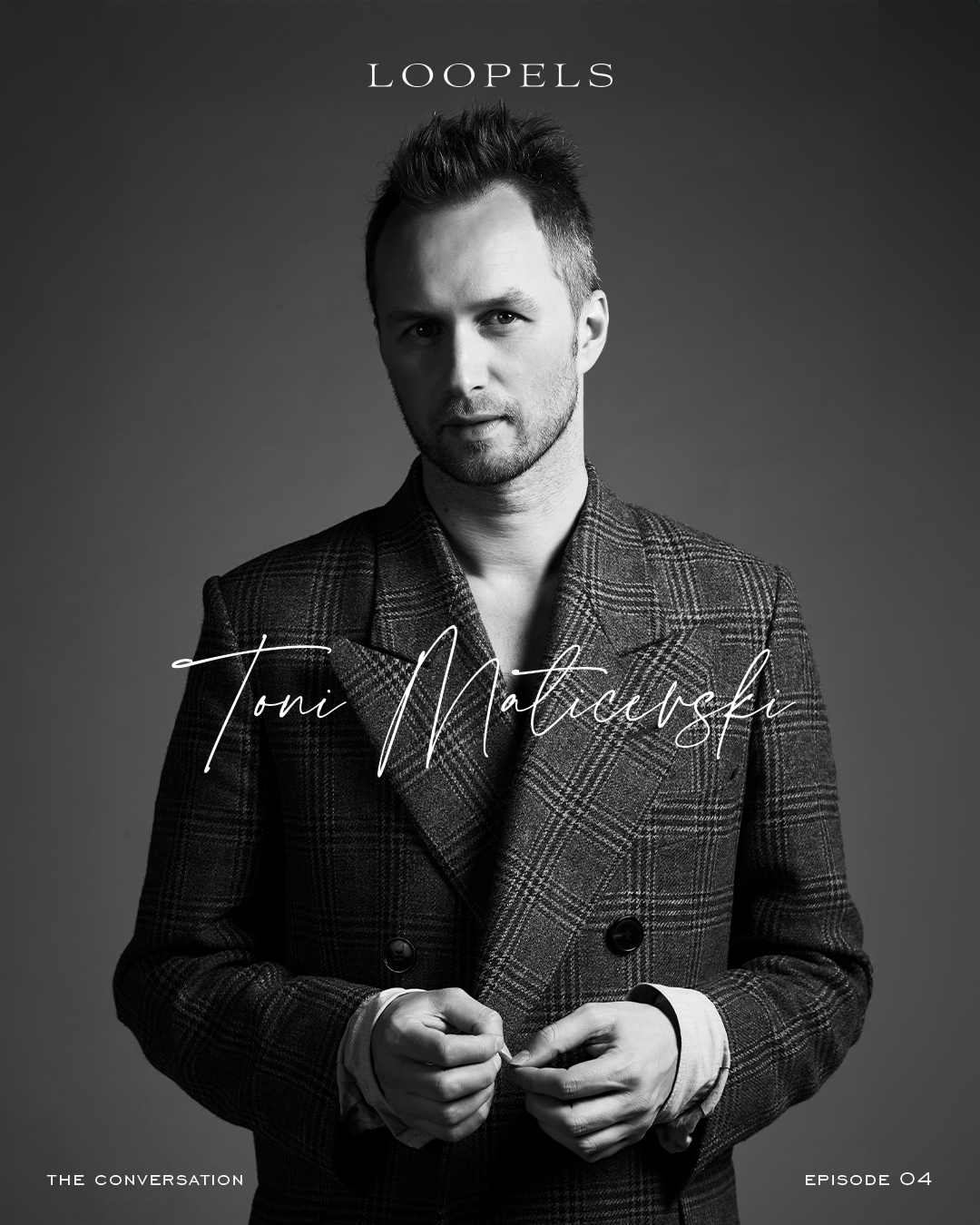
Letter to Myself — Inspired by Toni Maticevski
Dear Loopels Community,
There is a difference between being open and being available to everything.
Watching Toni, I am reminded that vulnerability does not have to come at the expense of boundaries. That authenticity is not endless access. That softness and strength can live quietly beside each other.
In an industry built on urgency, visibility and the constant pressure to produce more, there is something deeply radical about a person who knows where they end and where their values begin.
Over time, he has cultivated something increasingly rare, respect for self.
The ability to say no without apology.
To choose restraint in a culture that often rewards excess.
To understand that protecting your energy, your standards, your creativity and your peace is not selfishness. It is stewardship.
But perhaps more than that, it is the understanding that what we refuse shapes us too.
That a life is not built only through what we accept, pursue or achieve.
Sometimes it is defined by the opportunities we decline.
The rooms we do not enter.
The expectations we quietly choose not to inherit.
There is dignity in not chasing every room.
Wisdom in knowing that more is not always better.
And courage in allowing your work, rather than your performance of self, to do the talking.
I had the pleasure of meeting Toni early in my career.
Long before this conversation.
And what stayed with me was not simply the creativity, the discipline or the precision of his work.
It was his gentleness.
His kindness.
His genuine curiosity about the human layers of people.
In a world that can sometimes feel transactional, performative and relentlessly surface level, there is something profoundly refreshing about encountering someone who remains deeply creative without losing their humanity.
Genuinely kind people.
Thoughtful people.
People interested not only in what you do, but in what shapes you.
I suspect that is part of what makes his work resonate so deeply.
Because his creations do not feel detached from the person behind them.
His emotions, his trials, his observations, his tenderness, they are woven quietly into what he makes.
There is not a time I wear one of his pieces that I do not feel amplified.
Not disguised.
Not transformed into someone else.
Amplified into a stronger expression of myself.
And perhaps that is its own rare form of artistry.
Creating beauty that does not eclipse the person wearing it, but honours them.
Perhaps maturity is not about becoming harder.
Perhaps it is about becoming clearer.
Clearer about what matters.
Clearer about what costs too much.
Clearer about the quiet power of living in alignment with your own values, even when the world keeps asking for another version of you.
Toni reminds me that boundaries are not walls against authenticity.
They are often what make authenticity sustainable.
A way of remaining vulnerable without becoming depleted.
Present without becoming consumed.
Successful without losing the deepest respect for oneself.
And maybe that is its own kind of elegance.
Not excess.
Not endless expansion.
But the discipline of editing.
The quiet courage of stripping away what is unnecessary, until what remains feels undeniably true.
The discipline of knowing who you are and having the courage to honour it.
Bruce & Chyka Keebaugh
The quiet architecture of partnership
Dear Loopels Community,
Partnership, in the world of Loopels, is not a finish line or a definition of worth.
It is simply one of the many landscapes we encounter on the climb of becoming.
For some, it arrives early.
For others, it arrives later.
For many, it evolves, dissolves, reshapes, or takes unexpected forms.
But at its heart, partnership is not about having someone,
it is about staying true to who you are when someone joins you on the path.
Loopels honours that the first and most enduring partnership is the one we form with ourselves:
the voice we are learning to trust,
the boundaries we are learning to hold,
the dreams we are brave enough to name out loud.
Only from that place, the grounded self, the steady self, the self that is no longer performing —
can another person truly meet us.
And when they do, partnership rarely looks like the grand cinematic moments we imagine.
More often, it is built in the mundane:
the repeated rituals of everyday life,
the cups of coffee made without asking,
the shared car rides,
the quiet check-ins before the day begins,
the soft landing of knowing someone sees you even on the days you are not shining.
It is the steady accumulation of ordinary moments,
stacked gently over many days, years,
a lifetime that creates a sense of belonging.
Partnership is also the acknowledgement that the person beside you is imperfect, just like you.
Their flaws are part of their journey, not yours to fix.
Their evolution is their responsibility, just as your healing is yours.
A partner isn’t meant to complete you or correct you;
they are meant to play a different role entirely:
to stand beside your becoming without interrupting it,
to be a witness, a steadier, an amplifier
not an architect of your identity.
In this way, partnership becomes an expansion of self, not a replacement for it.
A companion to the climb, not the reason for it.
A good partner doesn’t make you more whole;
they honour the wholeness you’ve already claimed.
And for those not in partnership, the story is no less powerful.
You are not “waiting.”
You are building.
You are climbing.
You are shaping the version of yourself who can hold the life you desire,
with or without another person in the frame.
Loopels celebrates every form of becoming:
the solitary seasons, the joined seasons, the transitions in between.
Because reinvention doesn’t happen in one way,
it happens in many.
What matters most is not whether you walk alone or with another,
but whether you keep walking toward your own truth.
Partnership, when it comes, simply becomes another chapter in the larger story of you,
a story defined not by who stands beside you,
but by the woman you are becoming as you rise.
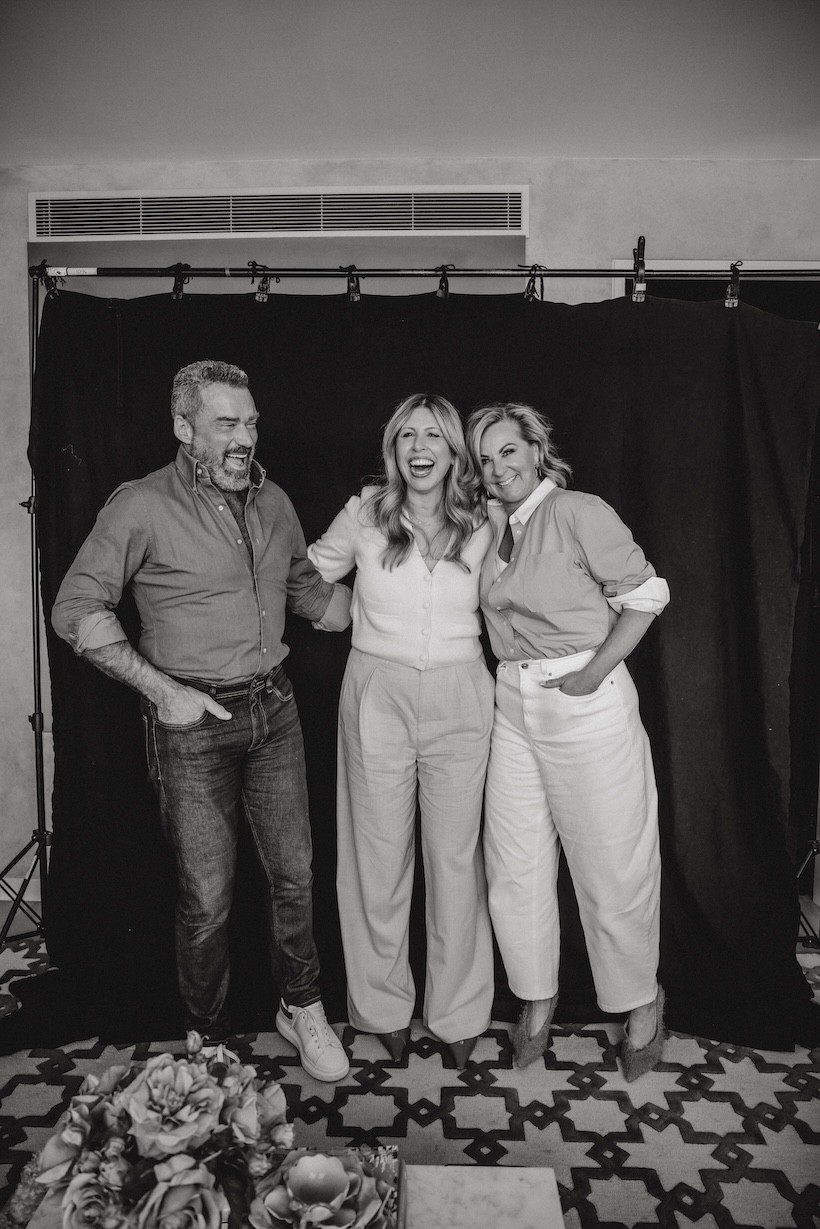
And this is why I chose Bruce and Chyka as part of the podcast.
Throughout our conversation, they speak about their journey, as partners, yes, but also as two individuals who have spent decades learning how to stand beside one another without losing themselves.
What stays with you is not the milestones or the achievements; it’s the rhythm underneath it all.
That quiet hum that only comes from seasons of ebb and flow, the rising, the recalibrating, the returning to each other again and again.
They are not an example of perfection; they are an example of possibility.
Of what partnership can look like when two people choose, every day, to keep expanding rather than collapsing inward.
They remind us that success in partnership isn’t about never falling, it’s about who reaches for your hand when you do.
Because sometimes the right partner isn’t the person who walks in with all the answers,
but the one who offers a different lens when your own feels clouded,
like tilting a prism just slightly and suddenly seeing light split into colour.
Their story teaches us that partnership can be a companion to becoming:
a force that stretches us, steadies us, challenges us, and softens us
And for those who walk alone, the message is no less powerful:
With or without another person in the frame, you are already in motion.
Loopels celebrates that.
Every season, every shift, every loop.
Because the art of change lives in all of us
in the solitary climbs,
in the joined climbs,
and in the brave, imperfect steps we take toward our best self.
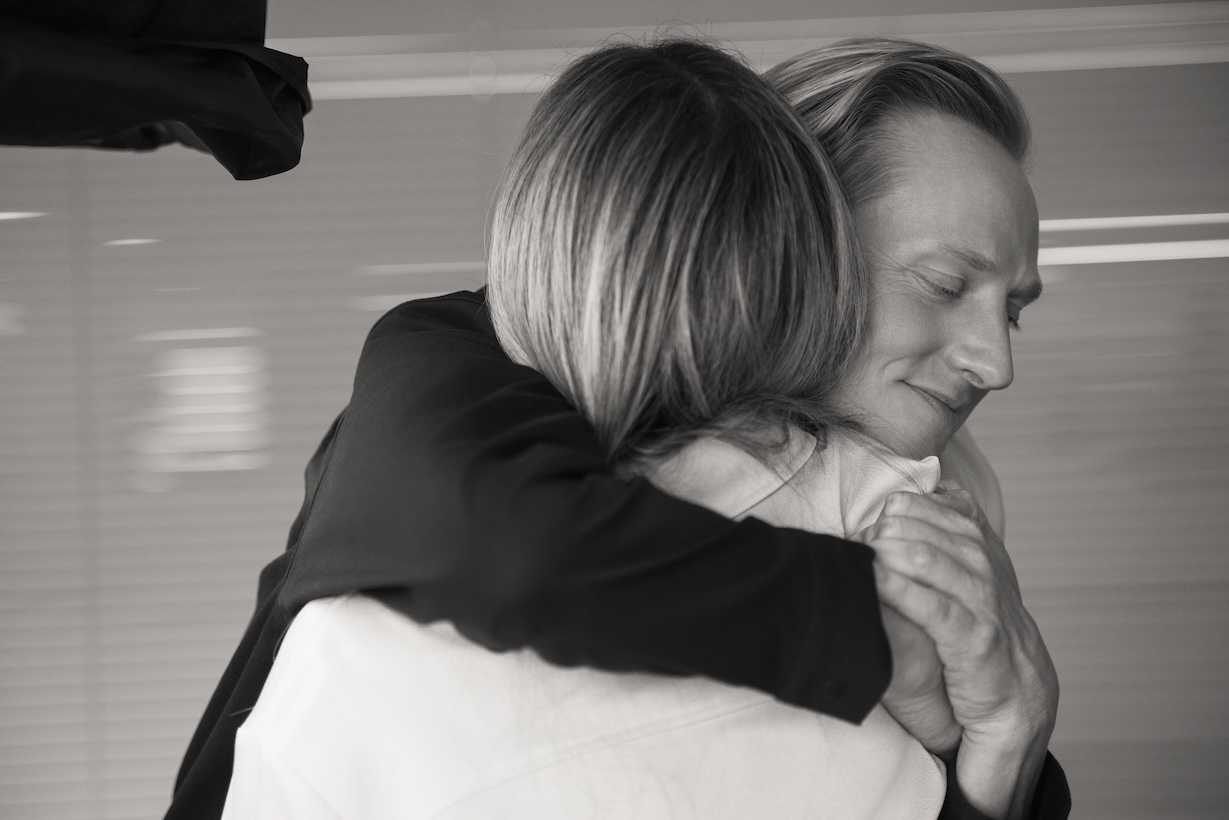
David Hallberg
On Devotion, Discipline, and the Life Behind the Applause
Dear Loopels Community,
Some journeys are not defined by the spotlight,
but by the shadows a person learns to walk through to reach it.
David Hallberg’s story is one of those rare narratives not about applause, but about devotion.
Not about perfection, but about the cost of pursuing something so deeply that it shapes the marrow of who you are.
His story began with alove of dance
It was shaped on stage and beyond it
in quieter places
in bullying and questioning,
in moments of isolation,
in discipline,
and in the longing to belong
to a world that did not yet know how to hold him.
And then later the injury.
Not the kind that simply sidelines a dancer,
but the kind that asks a human being to confront who they are without the one thing that had always defined them.
In those suspended years between the pain and the possibility David discovered what many of us only learn through heart break:
identity is not something we can hold still.
It moves.
It asks.
It grows.
It is devotion.
Commitment.
Practice.
A daily return —
and the courage to keep going.
And that is what makes his story special
David’s story teaches us something else entirely:
The art of change sometimes demands a kind of inner discipline
the courage to keep showing up to yourself, even when nothing feels certain.
A willingness to return to yourself again and again,
long before you have the certainty that you’ll ever rise again.
His journey was not merely about dancing again.
It was about rebuilding from the inside out.
It’s about discovering a deeper self than the one who stood at the centre of the stage all those years ago.
David shows us that excellence is not brilliance.
Excellence is endurance.
It’s the willingness to climb when the mountain grows steeper.
It’s the capacity to hold disappointment in one hand and possibility in theother.
It’s knowing that discipline is not a punishment
it is a devotion to the life you are meant to live.
And just like many of us, he had to ask the most frightening question:
Who am I without the thing that once defined me?
The answer, as always, was waiting in the climb.
In the humility of starting again.
In writing a new vocabulary for himself — one that came from strength, not survival.
So to all of you reading this letter to myself:
If you are rebuilding…
If you are re-identifying…
If you are returning to a version of yourself that injury, life, or circumstance once pushed aside…
Let David’s story remind you:
You are not lost.
You are in the discipline of becoming someone new.
And the person you will emerge as
wider, wiser, steadier
will carry a depth no unbroken path could ever have given you.
With quiet strength,
Helen
Loopels
Reinvention - The Art of Change
Tatiana Blatnik
Dear Loopels Community,
There are moments in life when we don’t choose the mountain; the mountain chooses us.
A diagnosis. A separation. A grief we didn’t expect. A life that changes shape faster than we can understand it.
In my conversation with Tatiana, we spoke to this so honestly: the way reinvention begins with rupture, with a life that suddenly asks us to become someone we have not yet met.
Tatiana trusted me, and the intention behind Loopels, to hold her story with care. She trusted my own journey enough to share hers so openly. For that, I am deeply and forever grateful.
But here is the truth she embodies so gracefully, and one I want to share with you:
You do not start your climb empty.
There is always a version of you
that existed before the challenge, the you who laughed freely, trusted
instinctively, hoped without hesitation.
She is not gone.
She is the foundation.
Reinvention is not about discarding her.
It is about carrying her with you into the unfamiliar so the person you are becoming is not a stranger, but an enriched continuation.
And yes, enriched is the rightword.
Not perfected.
Not resolved.
Not fully healed or fully understood.
But enriched, strengthened, textured, deepened.
Because surviving something hard does not mean you wanted the challenge.
It does not mean you understand it.
It does not mean you have made peace with it.
It means only this:
You kept going.
You kept breathing.
You kept choosing yourself long before you felt certain.
Reinvention asks for courage long before it offers clarity.
It asks for self-belief in moments when belief feels unreasonable.
It asks us to hold two truths at once:
I did not want this, and I will rise anyway.
And somewhere along the climb, often quietly and without fanfare, we realise we have become someone more spacious, more knowing, more profoundly alive.
Not because the challenge was a gift,
but because we are a force.
A woman capable of rebuilding her world with tender hands, steady intention, and radical grace.
So, to each of you reading this, whether you are in the break or in the process of becoming someone new, I want you to hear this clearly:
You are not defined by what happened to you.
You are defined by what you build from it.
You are allowed to carry the unanswered questions.
You are allowed to feel the ache and the gratitude side by side.
You are allowed to move slowly, imperfectly, honestly.
Your courage is not measured by speed but by devotion:
to yourself,
to your climb,
to the life that is waiting for you on the other side of this season.
And just like Princess Tatiana’s story,
your reinvention will one day become a lantern for someone else.
With quiet strength,
Helen
Loopels